Article

PM Modi’s Dahod Visit Signals Strategic Focus on Tribal Empowerment and Regional Growth

May 27, 2025 11 min read
author Anamika Mishra, Sub Editor
news

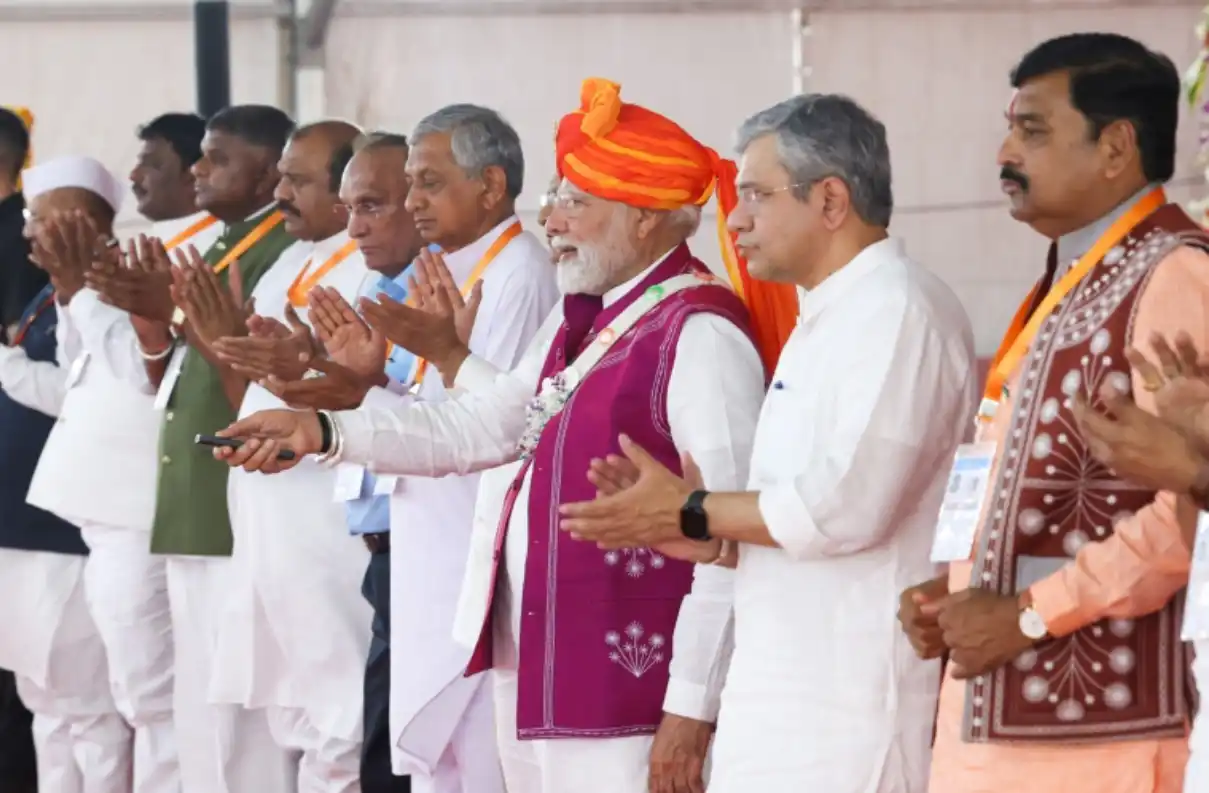
When Prime Minister Narendra Modi stepped into Dahod on May 26, 2025, he did more than flag off locomotives and inaugurate buildings, he sent a clear and calculated message: the days of India's tribal regions being development afterthoughts are over. His visit to this small but strategic district in eastern Gujarat, nestled close to the borders of Madhya Pradesh and Rajasthan, symbolized a renewed push for grassroots development, one that aligns both politically and economically with the larger narrative of “Viksit Bharat” or a Developed India.

The government’s announcement of ₹24,000 crore worth of development projects was not just about electrification, transportation, and job creation, it was about signalling a shift in how India’s tribal and underdeveloped districts are perceived: not as burdens, but as untapped engines of national growth.

Let’s be clear: Dahod is not just another dot on India’s map. It is a district where over 70% of the population belongs to Scheduled Tribes. By choosing Dahod as the epicentre of such high-value announcements, PM Modi made a strategic political move while simultaneously addressing a long-overdue development need.

Manufacturing in the Heartland: A “Make in India” Showcase

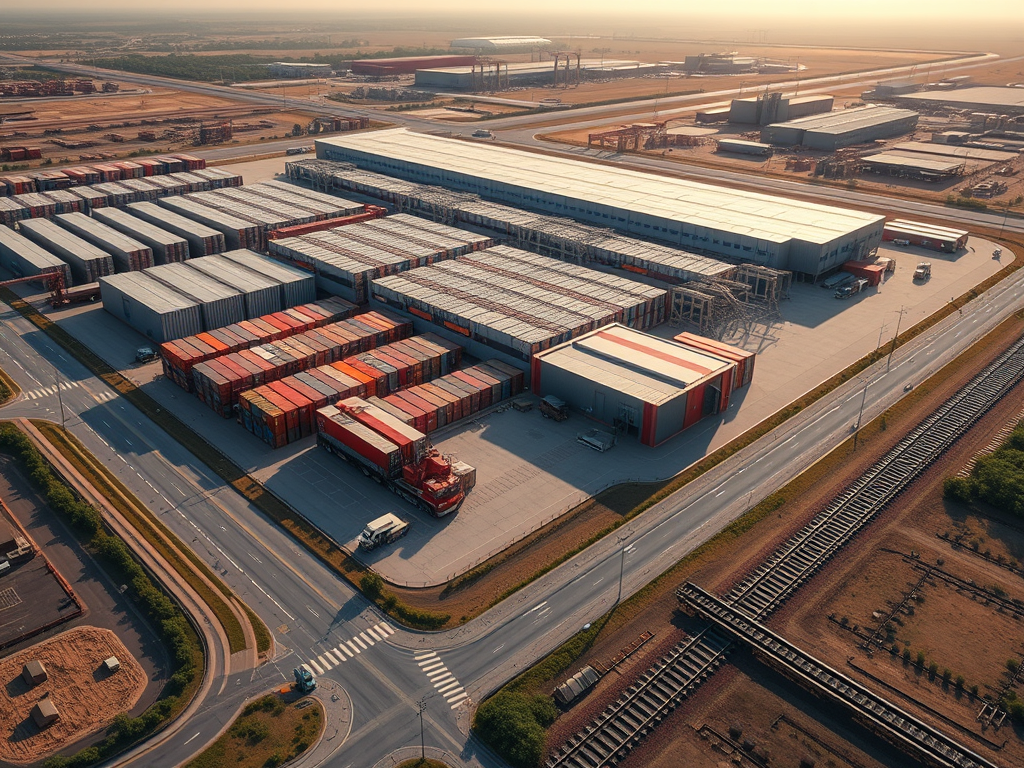
Perhaps the crown jewel of PM Modi’s visit was the inauguration of the ₹20,000 crore Electric Locomotive Workshop, India’s first factory capable of producing 9,000-horsepower locomotives, a joint venture with global engineering giant Siemens. The sheer scale of this project is staggering: 1,200 locomotives to be produced over 11 years, with direct employment for around 3,500 people and indirect employment potentially impacting over 7,000 more in ancillary industries and services.

This is “Make in India” done right, not just in terms of industrial production but in its human impact. Dahod’s youth, many of whom have historically migrated to cities for low-paying jobs, now see a future in their own backyard. The potential multiplier effect on local education, skill training, and micro-economies cannot be overstated.

But it also poses a question: Can India replicate this model in other tribal-dominated districts? If Dahod can host such a transformative project, why not Bastar, Simdega, or Malkangiri? This visit lays down the gauntlet, not only for the opposition but for the rest of India’s administrative machinery.

Smart Cities, Tribal Museums, and the Urban-Rural Reconciliation

Another key highlight was the launch of Smart City initiatives in Dahod worth ₹233 crore, which includes the development of municipal infrastructure and a dedicated Tribal Museum. Critics often deride Smart City projects as urban elitism wrapped in buzzwords. But here, the Smart City push isn’t about glass towers or rapid transit. It’s about basic civic dignity solid waste management, better drainage systems, modernized government offices, and public access to clean water.

The Tribal Museum, meanwhile, is not just a cultural initiative, it’s a recognition of identity. In a political climate where culture is often weaponized, this museum could serve as a space of pride and pedagogy for local communities, connecting tribal history with national consciousness.

Modi understands symbolism and by inaugurating this museum himself, he not only pays homage to indigenous heritage but reaffirms tribal people’s place in India’s mainstream.

Electrification and Vande Bharat: Connecting the Margins

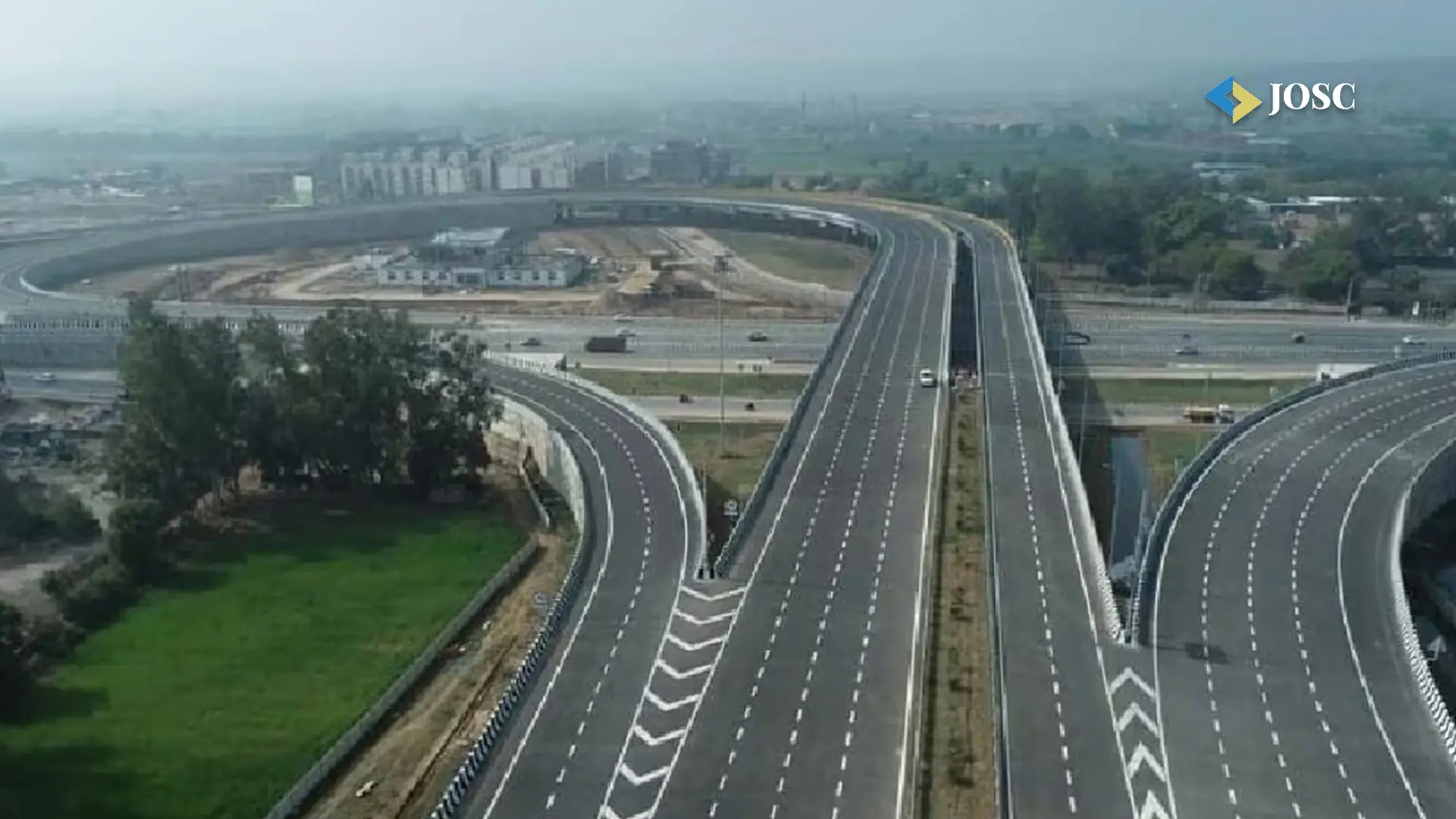
Modi also inaugurated the electrified Sabarmati–Botad railway section and flagged off the new Ahmedabad–Veraval Vande Bharat Express. These aren't vanity projects, they’re infrastructural leaps with clear intent: to integrate the tribal belt with urban industrial corridors and pilgrimage circuits, such as Somnath and Dwarka.

Gujarat has now achieved 100% railway route electrification. That’s not just a badge of honour for the Indian Railways but a reflection of how sustained policy focus can drive regional equity in transport infrastructure. When freight and passengers can move faster and cheaper, economic activity follows.

Moreover, it quietly lays the foundation for more future-ready supply chains especially in agri-commodities and small-scale manufacturing, where Dahod and similar districts could find their competitive edge.

Education as Empowerment: The EMRS Surge

No development narrative is complete without education, and here too, the numbers speak volumes. The Modi government has announced the rollout of 740 Eklavya Model Residential Schools (EMRS) nationwide, with over ₹7,000 crore allocated in this fiscal year alone. By March 2026, the government aims to make 728 of them fully functional, offering modern education to over 3.5 lakh tribal children.

In regions where dropout rates are high due to poverty, distance, and linguistic barriers, this is a structural game-changer. Education not only brings jobs but agency and a child educated today is a community transformed tomorrow.

The real challenge, however, lies in execution. Will these schools be adequately staffed, equipped, and monitored? The intent is there, and the budget backs it. Now implementation must match ambition.

Healthcare and the Shadow of Sickle Cell

Modi’s Dahod visit also aligns with his earlier national initiative to eradicate sickle cell anemia, a disease disproportionately affecting tribal communities. The disease, often misdiagnosed or untreated due to lack of medical access, has been a silent killer in the heartland.

The government’s new mission-mode campaign promises genetic screening, counselling, and treatment. While the effort is commendable, it again demands sustained engagement tribal healthcare can’t be a one-time budget line; it must be a long-term institutional commitment. Primary health centers need to be well-stocked, well-staffed, and digitally connected to district hospitals for it to work at scale.

The Political Calculus: Not Just Welfare, But Votes

While much of Modi’s Dahod visit focused on policy, let’s not pretend there was no politics at play. Gujarat is going to polls next year, and tribal votes especially in Dahod, Panchmahal, and Chhota Udepur can swing several key constituencies.

The tribal belt has traditionally leaned toward the Congress, but the BJP has been making consistent inroads through a mix of welfare schemes, ideological engagement (especially through Vanvasi Kalyan Kendra), and a narrative of dignity. Modi’s visit wasn’t just developmental, it was deeply political.

Yet, unlike traditional vote-bank politics that often stop at tokenism, this outreach is layered with infrastructure, education, healthcare, and employment. It’s not a handout, it’s a hand-up and that may be the most durable political strategy of them all.


Dahod: A Model for Bharat 2.0?

The big question now is whether Dahod can serve as a template. With its mix of high-tech manufacturing, localized employment, educational institutions, and smart infrastructure, Dahod might very well become the “model tribal district” of India.

But real transformation will require more than visits and speeches. It demands uninterrupted power supply, local entrepreneurship incentives, backward-forward supply chain linkages, and micro-finance systems designed around tribal socio-economics.

It also means giving the tribal voice a seat at the table not just as beneficiaries but as planners, builders, and leaders. Programs like the “Pradhan Mantri Janjati Adivasi Nyaya Maha Abhiyan” (PM-JANMAN) and allocation for PVTGs are a step in that direction, but policy must now translate into power economic, social, and political.

Addressing an event at Dahod in his home state Gujarat, he said the country born after partition has focused on hostility towards India and causing harm.

“India, on the other hand, is committed to eradicating poverty, strengthening its economy, and achieving development. After partition, the newly formed country had just one goal to hate India and try to stop our progress.

“But we have only one goal to keep moving forward, to eliminate poverty, and to build a Viksit Bharat,” he told the audience.

Modi said a developed India can only be built when both its armed forces and economy are strong. He said his government is continuously working in this direction, ensuring national security and economic growth go hand in hand.

“A truly developed India is only possible when our armed forces are strong and so is our economy. And we are constantly working in that direction, with full dedication and determination,” he added.

Hailing Operation Sindoor, which was launched in response to the brutal killing of 26 people by terrorists in Pahalgam, the prime minister said nine major terror hubs across the border were identified and destroyed in 22 minutes, adding that the Pakistani military attempted retaliation but was decisively defeated by the Indian forces.

Modi said he fulfilled his responsibility as the nation’s leader, giving full freedom to India’s armed forces, who then executed the operation unseen in decades.

“They (terrorists) challenged 140 crore Indians and that is why I did exactly what you elected me to do,” he said.

“We gave full freedom to our armed forces and our brave-hearts destroyed their biggest terrorist camp in just 22 minutes, in response to their misadventure on April 22,” he said.

“Can India remain silent on whatever the terrorists did in Pahalgam, Jammu and Kashmir?

Can Modi remain silent?” he said.

“Operation Sindoor was not just a military action but a reflection of India’s values and emotions,” he said.

The Prime Minister said terrorists had no idea of the consequences of their actions, recalling the brutality of killing a father in front of his children.

He said such images still ignite anger across the nation, as 140 crore Indians were challenged by terrorism.

“If anyone dares to wipe off the sindoor of our sisters, their end is certain. That’s why Operation Sindoor is not just a military operation, it is a reflection of our Indian values and the deep emotions we hold close to our hearts,” he said.

“The terrorists could not have even dared to imagine how difficult it is to challenge Modi,” the Prime Minister asserted.

Modi reiterated his deep respect for the valor of India’s armed forces, saluting their courage and dedication from the sacred land of Dahod.

A Visit That Matters

Dahod, once perceived as a tribal periphery on India's vast developmental map, now stands as a beacon of what inclusive and meaningful progress can look like in the 21st century. Prime Minister Narendra Modi’s recent visit was not merely ceremonial, it was a conscious and deliberate shift in India’s developmental philosophy. It was a bold assertion that the heartland matters just as much as the headline cities, and that tribal regions are not just recipients of charity but drivers of national resurgence.

In a policy landscape often dominated by urban-centric blueprints and metropolitan narratives, Dahod offers a grounded counterpoint. Its transformation spurred by strategic infrastructure investments, education drives, and employment generation is a masterclass in decentralized development. The electrified railway lines, the locomotive factory, the tribal museum, the EMRS institutions, and improved civic amenities are not isolated initiatives, they are interlinked threads in a new fabric of growth that stitches together identity, economy, and dignity.

What makes Dahod significant is not just the scale of investment but the philosophy behind it: that empowerment must come from proximity, that development must respect and integrate local cultures, and that economic justice begins when opportunity is available at one’s doorstep. This bottom-up model of regional renewal could set a precedent for how India approaches its vast and often neglected hinterland.

As India aspires to become a $5 trillion economy and a global manufacturing powerhouse, the success of this vision hinges not just on glitzy industrial parks or foreign direct investment, but on our ability to harness the latent potential of districts like Dahod. Imagine the economic vitality that could be unlocked if such models are rolled out in every tribal-majority and underserved region each equipped with quality education, local industry, digital infrastructure, and sustainable health care.

This is not just about economic indicators or political optics. It's about rewriting the social contract. When tribal communities see their children studying in modern schools, when local youth find dignified jobs in factories near their homes, and when elderly citizens visit functional clinics instead of walking miles to the nearest health center then real transformation begins. Then, “Sabka Saath, Sabka Vikas” is not a slogan, it becomes a lived reality.

Dahod’s emergence as a development model reminds us that the true test of governance lies not in the metros but in the margins. It challenges us to rethink development beyond GDP to include dignity, participation, and equity. And it serves as a moral imperative for all future governments that no region, no matter how remote or disadvantaged, should be left behind in the journey towards a Developed India.

If this model of tribal-focused, regionally rooted development is championed across the country with the same commitment shown in Dahod, we may not only bridge historical inequities, we might just unlock the next engine of India’s growth story. In doing so, we won’t merely uplift a region, we’ll redefine the soul of India’s progress.

Dahod is not the end of the road, it is the beginning of a new path.


Explore the latest edition of Journal of Supply Chain Magazine and be part of the JOSC News Bulletin.

Discover all our upcoming events and secure your tickets today.


Journal of Supply Chain is a Hansi Bakis Media brand.

Leave Comment

logo

Subscribe to Our Newsletter

The week’s best stories, handpicked by JOSC editors in your inbox every week.

Stay informed with exclusive content