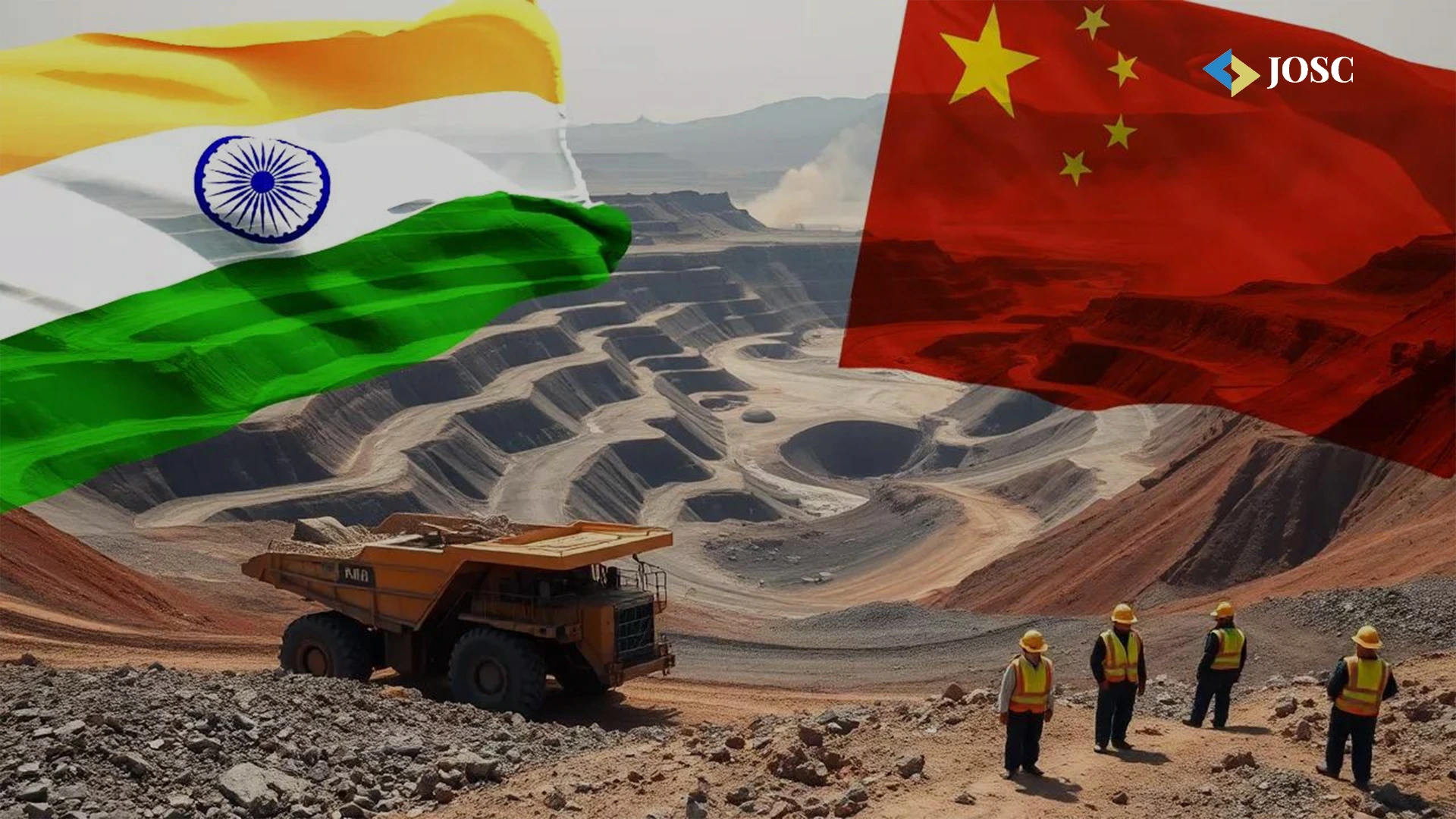
On April 4, 2025, China tightened its grip on the global rare-earth supply chain by implementing a stringent export licensing regime for rare-earth magnets and associated materials. Under the new rules, exporters must provide comprehensive documentation on the intended end-use of the materials, along with legally binding non-reexport guarantees from the importing entities. These conditions are aimed at ensuring that Chinese-origin rare-earth products do not indirectly support foreign military or strategic industries, especially in the U.S., Europe, and allied countries.
The new system has led to a sharp deceleration in the issuance of export permits even for orders that had been placed well before the policy came into effect. Multiple Indian and Western firms, including major players in the electric vehicle (EV), defense, and electronics sectors, have reported prolonged approval timelines and procedural uncertainties. Some Indian companies have stated that applications submitted in early April were still awaiting clearance nearly two months later, causing significant disruptions to manufacturing schedules.
Despite official reassurances from Beijing that exports will continue in line with global trade norms, on-the-ground experiences suggest otherwise. Many importers claim that the Chinese Ministry of Commerce is selectively scrutinizing or holding up requests, particularly from countries perceived as strategically sensitive.
This regulatory move has reinforced China’s dominant position in the rare-earth sector. Currently, China accounts for about 90% of the world's processing capacity for rare-earth permanent magnets, which are essential components in electric motors, wind turbines, defense systems, and advanced electronics. In addition, China controls over 60% of the known global reserves of rare earth elements (REEs) and is responsible for roughly 95% of the world’s rare-earth mineral production. This monopolistic advantage gives Beijing powerful leverage in the geopolitical and economic realms, particularly at a time when clean energy technologies and strategic manufacturing are becoming more resource-dependent.
The April 4 policy shift has therefore not only deepened global supply chain anxiety but also exposed the vulnerabilities of countries including India that are heavily reliant on Chinese supplies for critical mineral inputs.
Immediate Impact in India: Supply Crunch & Production Threats
Surge in Magnet Imports
India has witnessed a sharp spike in its imports of permanent magnets, underscoring the country’s growing dependency on foreign particularly Chinese supplies for critical industrial components. In the financial year 2024–25, India’s total imports of permanent magnets surged to approximately 53,700 tonnes, nearly doubling from 28,700 tonnes recorded in FY 2023–24. This dramatic increase highlights the accelerating demand across sectors such as electric vehicles (EVs), renewable energy, consumer electronics, and industrial automation, all of which rely heavily on high-performance magnets made from rare-earth elements like neodymium, praseodymium, and dysprosium.
Crucially, about 93% of these imports originated from China, reinforcing the extent of India's dependence on a single supplier for such a strategically vital resource. While the import volume nearly doubled, the total value of these imports saw only a modest rise estimated between 5% and 12%. This discrepancy suggests a notable decline in the average price per tonne of imported magnets. Experts attribute this price drop to a temporary glut in Chinese supply early in the fiscal year, possibly linked to pre-licensing stock clearances and a softening in global prices before China’s April 2025 export restrictions took full effect.
However, this price dip is unlikely to persist. With China now tightening export procedures and approvals under new licensing requirements, future import costs may escalate significantly, especially if Indian buyers are forced to compete in a constrained global market or shift to more expensive alternative sources. The surge in volume amid rising geopolitical risk illustrates both a short-term effort by Indian industries to stockpile materials and a long-term strategic vulnerability that the government is now racing to address.
Industrial Disruption & Job Risks
India’s industrial sector is already beginning to feel the ripple effects of China’s tightened export controls on rare-earth materials, with significant disruptions looming across multiple high-dependency industries. One of the most immediate and visible impacts is in the audio electronics manufacturing sector, where over 21,000 jobs are reportedly at risk. These roles, many of which are based in small and medium-scale enterprises (SMEs) across Tamil Nadu, Karnataka, and Maharashtra, are directly tied to the availability of permanent magnets used in speakers, microphones, headphones, and other acoustic components. With supply lines from China becoming increasingly unpredictable, several manufacturers are either scaling down production or delaying expansion plans.
The electric vehicle (EV) and internal combustion engine (ICE) automobile sectors both major consumers of rare-earth magnets used in motors and drivetrain components, are facing similarly acute challenges. According to a recent warning from ratings agency Crisil, production lines across India could face partial or complete shutdowns in the coming months if supply conditions do not improve. At present, nearly 30 import license applications submitted by Indian auto component manufacturers remain pending under the new Chinese approval regime. Many of these applications have been in limbo for over 45 days since the new export restrictions were enforced in early April 2025.
This growing backlog is causing increasing anxiety among automakers and tier-1 suppliers, who fear a domino effect on delivery schedules, inventory management, and workforce stability. Some companies have begun rationing their existing magnet stockpiles, prioritizing higher-value or export-linked production orders, while others are already reporting idle capacity in select facilities. As the uncertainty continues, the broader risk is that if India cannot quickly establish alternative supply chains or ramp up domestic production, thousands more jobs and critical investments in sectors like EVs, renewable energy, and electronics could be placed in jeopardy.
Automakers Feeling the Heat
India's leading automakers are increasingly under pressure as the rare-earth magnet shortage, triggered by China's export restrictions, begins to impact production planning and strategic timelines. Maruti Suzuki, the country’s largest car manufacturer, has already taken a significant step by scaling down its electric vehicle (EV) production targets. The company’s much-anticipated e-Vitara model, initially projected to be a flagship launch in its EV lineup, has had its rollout volume slashed by nearly two-thirds. According to industry insiders, the adjustment is directly tied to supply constraints surrounding neodymium-based permanent magnets, which are essential for EV motors. Without a reliable influx of these components, maintaining consistent output has become unfeasible, forcing Maruti to delay or reduce its launch volumes despite strong domestic demand and policy incentives.
Tata Motors, including its luxury arm Jaguar Land Rover (JLR), has so far managed to avoid any immediate production halts. Company executives report that their current inventory levels, built up as a buffer in early 2025, have allowed them to continue operations without major disruption. However, the company is not taking any chances. Tata Motors has ramped up its efforts to identify and contract with alternative suppliers from countries such as Vietnam, Australia, and even within India, where smaller-scale magnet initiatives are being incentivized under government schemes. JLR, which relies heavily on advanced magnet technology for its premium electric drivetrains, has also flagged the issue to UK regulatory bodies as part of broader risk management efforts.
Despite this short-term stability, the situation remains volatile. If export licenses from China continue to be delayed or restricted, even companies like Tata Motors may face supply chain bottlenecks in the next quarter. The growing urgency among automakers to diversify their sourcing underscores just how central rare-earth magnets have become to India’s automotive ambitions especially as the country targets aggressive EV penetration goals over the next decade.
India’s Response: Fast-Track Strategies
1. Import Licensing & Diplomatic Channels
Since China imposed stringent export license requirements on rare-earth magnets in April 2025, Indian firms have been scrambling to secure approvals to prevent major disruptions in their manufacturing operations. In just a few weeks following the new policy, the number of Indian companies applying for export permits from China surged from 11 to 21, a nearly twofold increase that underscores the growing urgency within India’s industrial ecosystem. These companies span critical sectors such as automotive, consumer electronics, renewable energy, and defense manufacturing, all of which are heavily dependent on rare-earth permanent magnets sourced almost exclusively from China.
The application process itself has proven to be slow and complex, with many Indian firms experiencing long delays and uncertainty around approval timelines. The sudden procedural bottlenecks have added to the pressure on Indian manufacturers, who typically operate on just-in-time inventory systems and cannot afford prolonged supply chain interruptions. With the permit backlog growing, the industry is increasingly concerned about potential production slowdowns and cost escalations, especially in the coming quarters.
In response to the rising concerns, the Indian government has begun taking proactive diplomatic steps to ease the logjam. Key industry associations, including the Society of Indian Automobile Manufacturers (SIAM) and the Automotive Component Manufacturers Association of India (ACMA), are working closely with the Ministry of Commerce and Industry and the Ministry of External Affairs to initiate official dialogues with Chinese trade authorities. These discussions aim to streamline the permit approval process for Indian importers by seeking clarity on documentation, compliance norms, and processing timelines.
The Indian government is also exploring the possibility of negotiating a bilateral mechanism or fast-track window for essential rare-earth imports to ensure that critical sectors are not held hostage to extended bureaucratic delays. These efforts, while still in early stages, reflect a broader recognition that industrial resilience must now be supported not just by domestic production but also through agile diplomacy and international trade engagement. As the situation evolves, the outcome of these talks could prove crucial for determining how smoothly India can navigate the current supply chain turbulence.
2. Stockpiles & Fiscal Incentives
In light of growing supply chain vulnerabilities, the Indian government is actively working on a strategy to build long-term stockpiles of rare-earth magnets, a move aimed at insulating key industries from recurring external shocks particularly those stemming from China's tightening export controls. These stockpiles are intended to act as a buffer for critical sectors such as electric vehicles, defense, electronics, and renewable energy, which are all heavily dependent on a steady supply of high-performance magnets made from rare-earth elements like neodymium, praseodymium, and dysprosium.
To make this initiative economically viable, especially given that Chinese exports often benefit from state subsidies and price advantages, the Indian government is planning to integrate the stockpiling strategy with a broader Production-Linked Incentive (PLI) scheme. These incentives are designed to offset the higher costs associated with domestic magnet production, including mining, processing, and value addition. By narrowing the price gap between locally produced magnets and cheaper Chinese imports, the PLI framework aims to make India’s rare-earth manufacturing ecosystem competitive on a global scale.
According to official sources, a substantial incentive pool ranging between ₹3,500 crore and ₹5,000 crore is currently under finalization. This funding will be channeled toward supporting private sector investments in rare-earth extraction, refining, and magnet manufacturing infrastructure. The scheme will likely prioritize projects that demonstrate end-to-end integration from mining and separation of rare-earth oxides to the final fabrication of permanent magnets thereby strengthening the full value chain within the country.
In addition to bolstering domestic capabilities, this initiative is also seen as a long-term hedge against geopolitical risk. By reducing over-reliance on China and encouraging homegrown alternatives, India hopes to not only meet its own rising demand but also emerge as a potential supplier of rare-earth materials to friendly economies facing similar constraints. If implemented efficiently, the PLI-backed stockpiling and production program could mark a significant shift in India’s strategic approach to securing critical minerals and ensuring industrial resilience.
3. Policy Reform & Recycling Push
Amendments to the MMDR Act and a ₹1,500 crore recycling incentive scheme aim to promote extraction of rare-earth minerals (REMs) from tailings, e-waste, and fly-ash. Supported by the National Critical Mineral Mission, the initiative seeks to unlock untapped value from mining by-products and boost domestic critical mineral recovery.
4. Boost to IREL & Indigenous Production
IREL (India) Limited, established in 1950, plays a key role in India's rare-earth ecosystem, processing approximately 10,000 metric tonnes of rare-earth-bearing minerals annually. In a significant step toward value addition, the company recently commissioned a Rare Earth Permanent Magnet (REPM) plant in Visakhapatnam with a modest production capacity of 3 tonnes per year, focused on samarium-cobalt magnets. This facility marks India's first serious foray into rare-earth magnet manufacturing, which is crucial for high-temperature and defense-grade applications. However, when compared to China’s overwhelming dominance with an annual rare-earth magnet output exceeding 160,000 tonnes, India’s current capacity remains minuscule. This vast disparity underscores the urgent need for large-scale capacity expansion, advanced technology adoption, and strategic investment if India is to reduce its dependency and become a credible player in the global rare-earth magnet supply chain.
5. Global Diversification & International Ties
India is strengthening rare-earth supply by exploring partnerships with Kazakhstan, rich in 15 of 17 REEs, through ICAREF and mining agreements, while leveraging its Mineral Security Partnership membership led by the US. Concurrently, IREL has ended its export pact with Japan to prioritize domestic demand.
6. Tech Transfers & Domestic R&D
The government and Midwest Advanced Materials are establishing an NdFeB magnet plant in Hyderabad with a 500-tonne annual capacity, aiming to scale to 5,000 tonnes by 2030, supported by NFTDC technology. Additionally, five startups have received ₹6 crore in grants for developing rare-earth extraction and processing technologies.
Outlook & Challenges Ahead
India’s rare-earth magnet supply challenges have prompted a multi-pronged response, offering some short-term relief but underscoring persistent risks. In the immediate term, strategies such as strategic stockpiling, intensified diplomatic outreach with China, and production-linked incentives provide a crucial buffer against sudden supply disruptions.
However, analysts caution that if China continues to delay export approvals beyond July 2025, supply vulnerabilities may resurface, threatening industrial output and growth.
Looking to the mid-term, India is actively working to bolster its rare-earth ecosystem through expanded recycling initiatives, the establishment of domestic magnet manufacturing plants, and significant policy reforms aimed at unlocking mineral resources and fostering innovation. Despite these efforts, current domestic production and processing capacities remain modest and far short of the rapidly growing demand from sectors like electric vehicles, renewable energy, and defense.
In the long run, India’s ambitions are more comprehensive and transformative. The government and industry stakeholders aim to develop a fully integrated value chain from upstream mining and extraction to downstream magnet fabrication and end-product manufacturing achieving economies of scale necessary to compete globally. Establishing reliable foreign partnerships, particularly with countries like Kazakhstan and allies within the Mineral Security Partnership, will also be critical to diversifying supply sources and reducing dependency on China.
According to industry analysts, India faces a “steep trek ahead,” with significant gaps still to be bridged, especially in midstream processing capabilities and large-scale manufacturing. Overcoming these hurdles will require sustained investment, technological innovation, and coordinated policy support to secure India’s position as a resilient player in the global rare-earth magnet market.
Conclusion
China’s export restrictions on rare-earth magnets have exposed India’s significant dependence on these critical materials, causing noticeable production slowdowns and increasing economic risks across key industries. In response, India is adopting a coordinated, multi-pronged strategy to address the challenge. In the short term, efforts are focused on diplomatic engagement, speeding up export approvals, and building strategic stockpiles to cushion immediate supply shocks. Over the mid-term, the emphasis is shifting toward expanding domestic magnet manufacturing capacity, developing recycling technologies, and implementing regulatory reforms to unlock mineral resources and foster innovation. Looking further ahead, India aims to build long-term supply resilience by forging international partnerships and scaling up manufacturing capabilities to create a more self-reliant rare-earth ecosystem. While the journey toward an “Atma Nirbhar” (self-reliant) rare-earth supply chain is complex and demanding, the country is gaining momentum through increased investment in infrastructure, research and development, and supportive policy frameworks. How effectively India can translate its abundant reserves and growing industrial resolve into a dependable supply will be a critical storyline shaping the future of the global technology landscape in the years to come.
Explore the latest edition of Journal of Supply Chain Magazine and be part of the JOSC News Bulletin.
Discover all our upcoming events and secure your tickets today.
Journal of Supply Chain is a Hansi Bakis Media brand.
Subscribe to our Daily Newsletter
Subscribe For FreeBy continuing you agree to our Privacy Policy & Terms & Conditions