Article
Building India’s Supply Chain Future: A Visionary Dialogue with Prof. Jitesh Thakkar on PM GatiShakti, Infrastructure and Logistics Transformation
 Anamika Mishra,
Sub Editor
Anamika Mishra,
Sub Editor
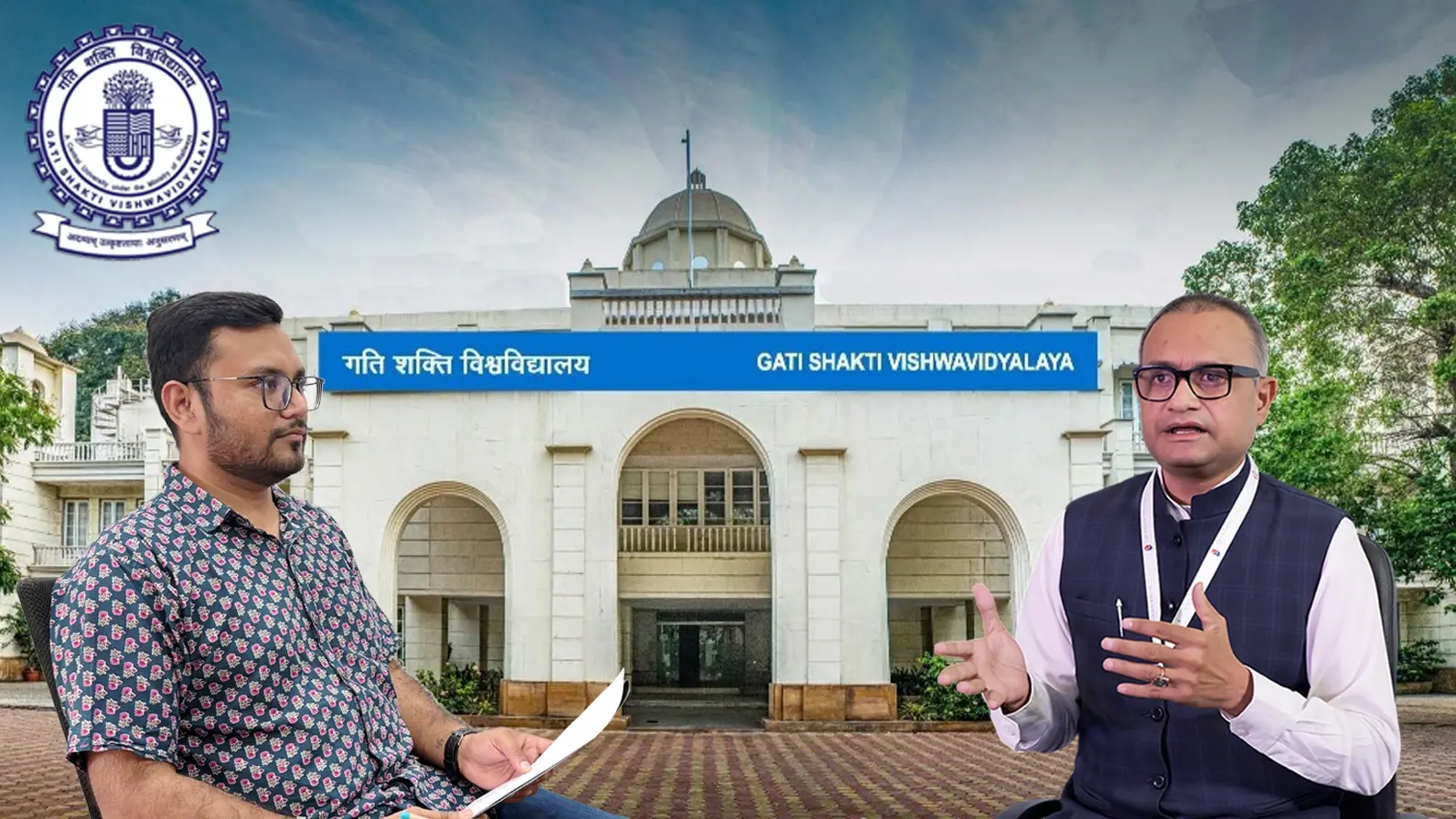
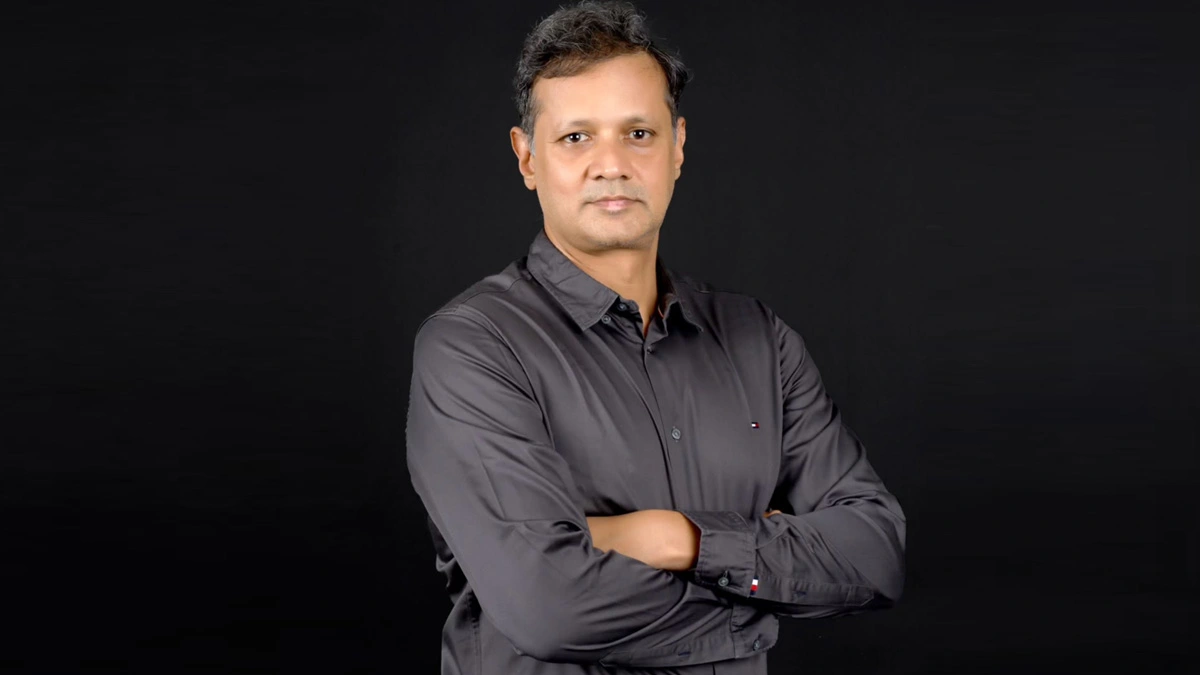
The supply chain sector is witnessing remarkable growth, and under the visionary leadership of Hon’ble Prime Minister Shri Narendra Modi, the logistics industry in India is progressing rapidly across all fronts. In this context, our founder, Shri Vatsal Patel, had an engaging discussion with Prof. Jitesh Thakkar, Dean of GatiShakti Vishwavidyalaya, focusing on the evolving landscape and immense potential of the logistics and supply chain sector. Read the full interview to gain valuable insights into this fast-emerging domain.
Mr Patel: How is the PM GatiShakti digital platform contributing to infrastructure development and reducing logistics costs and how does the newly launched Karma Yogi Bharat course align with this vision?’
Mr Thakkar: See, PM GatiShakti is actually a very powerful digital platform, it’s all about bringing different departments together to plan infrastructure in a more coordinated and efficient way. Earlier, things used to happen in silos, but now with GatiShakti, everyone’s on the same page. This has a direct impact on logistics when infrastructure is better planned, naturally, logistics costs come down. It’s a big shift.
Now, to make sure our officers like IAS, IPS and others are well-equipped to understand and implement this vision, we’ve introduced Karma Yogi Bharat. It’s a learning platform tailored specially for government officers. Through this, they can learn about initiatives like GatiShakti, how to use data effectively and how to take this knowledge into real-world implementation. So, it’s all connected digital platform, capacity building, and ultimately, better governance.
Mr Patel: How is PM GatiShakti helping to plan better infrastructure in India? And how will this help in reducing our logistics costs?
Mr Thakkar: So, PM Gatisakti, which is managed by BISEC, uses sensors and satellite images to plan holistic infrastructure in India. See, if you want to improve our supply chain competitive units, then our logistics cost must go down from present 14%, 13%, whatever value we are referring to 8% to 9%. So, this is the pitch. Now, government has thought since last 5 years, how can we do it. So, this is only possible if we create the infrastructure of multi-modal logistics. Now, multi-modal logistics means how can we have integrated logistics across rail, road, aviation and water. So, government has opted for infrastructure development and more than, let us say, 1000 lakh crore rupees they have devoted as a part of PM Gatisakti project. Now, whatever we see in aviation sector that almost number of airports have tripled. What we see in the port sector or maybe in the roads and highways. So, everywhere there is an infrastructure development. This infrastructure development is now not taking place in an isolated way. They want to create multi-modality.
Mr Patel: What exactly is multi-modality and could you explain it in a simple way so our readers can easily understand how it works in the context of logistics and transportation
Mr Thakkar: Sure, Multi-modality means using different types of transport to move goods in the best way possible. For example, if it’s cheaper and better for the environment to ship something by water from point A to point B, then you use a ship. After that, you might use a train to carry the goods further. It’s all about choosing the right transport at each stage to save money and reduce pollution.
but you see loading, unloading, handling all these are issues. So, government is developing 100 logistics parts. So, even last week, I had a session on multi-modal logistics management at IIT Delhi. So, government is developing 100 logistics parts. These multi-modal logistics parts basically will provide the enabling ecosystem and infrastructure where the integration of this cargo handling movement can take place.
All the modes of transportation can be integrated. So, we are keeping this in mind since last 5 years. Government is using the satellite images, the various data digitization is done and there are different 16 to 17 ministries, like Ministry of Railways, Ministry of Road, Transport & Highways, Ministry of Ports, Shipping & Waterways. All these ministries basically were working in silos. They were doing their projects without bothering about multi-modal logistics.Recently, I was approached by DPI to undertake a comprehensive study on the impact of the PM Gati Shakti initiative, specifically in terms of how it has influenced logistics costs across the country. As you're aware, under this initiative, any new government project now begins with the preparation of a Detailed Project Report (DPR) through the PM Gati Shakti Digital Portal. Over the past few years, the government has invested significantly in this initiative possibly in the range of ₹500 to ₹1,000 crore.
Now, the key question is: has this investment translated into measurable outcomes, particularly in reducing the logistics cost, which traditionally hovered around 14% of GDP? The aim of this study is to assess whether that figure has come down to, say, 11% or 12% post-implementation of Gati Shakti. We are now focusing on conducting a robust post-implementation impact analysis to capture those insights.
Mr Patel: Do you think initiatives like PM GatiShakti and multi-modal logistics will help attract more foreign investment to India?
Mr Thakkar: So, after the National Logistics Policy and PM GatiShakti, the big question is—what impact are we seeing on logistics costs? The truth is, unless we reduce our logistics costs, we can’t improve our supply chain competitiveness. If our logistics remain expensive, we won’t be able to attract foreign direct investment.
Foreign companies look for countries where it's easy and cost-effective to do business. If costs are high, they won’t be interested. Take China, for example, they attracted a lot of foreign investment because they first built strong infrastructure: good roads, bridges, highways, and airports. That’s what made them a global manufacturing hub. We need to move in the same direction. Because of that many companies from Europe and other places, they have set up their Intel or whatever. Establish their manufacturing plant at China. So, government has realized this late, but since last 5 years there is a huge investment in this infrastructure sector.
Look, if we really want to bring down logistics costs and make our supply chain more competitive, then building multi-modal connectivity is key. All these different parts like road, rail, air, and water transport need to be well-connected and integrated. That’s the foundation of an efficient logistics system.
Now, the National Logistics Policy is like an enabler, it supports this whole process. We’ve built the infrastructure, yes, but just having it isn’t enough. We also need to make sure we’re using it properly, that the capacity is fully utilized. The government is already working on this through various initiatives.
And there’s another important aspect people don’t always notice, our accounting system. Over the last 2–3 years, India has introduced a new accounting framework called the Indian Accounting System. This shift was important because earlier, our cost auditing structure was quite different from what’s used internationally.
Many countries follow IFRS, the global standard for financial reporting. But switching to that directly would’ve been tough for Indian industries. So instead of jumping straight into it, we took a more practical approach and developed our own system that aligns better with international norms but suits our needs too. This helps us integrate better with the global supply chain, especially when financial transactions are involved. And then once our businesses will be comfortable, we will go to the international standard in accounting.
Mr Patel: If you could give us a few examples, what is the difference between the IRFS and the Indian accounting?
Mr Thakkar: See, earlier we had a lot of structural complexities in our system, especially when it came to logistics and accounting. Let me give you a simple example suppose I’m sending cargo to Russia or Portugal. Many times, the cargo gets stuck at the port because clearances don’t happen on time. And if it's something perishable, like food or medicine, it gets damaged while waiting. That adds to the cost. So, one of the major issues was that our cost calculation and accounting systems were too complicated compared to international standards.
These days, everyone’s talking about emerging technologies like blockchain. But at its core, blockchain is essentially a shared ledger, a common way of recording and sharing transactions. For it to function effectively, however, all stakeholders need to ‘speak the same language’ in terms of their systems and standards.
Let me put it simply: imagine you're using a mobile phone with one operating system and I'm using another. Sharing files or data between us becomes a challenge, right? The same principle applies to global trade. If the way I define a product or a cost component is completely different from how it’s defined in the UK or Russia, then we run into compatibility issues. This lack of standardization slows down the entire process of commerce.
Recognizing this, the government took proactive steps. They consulted industry stakeholders, understood the ground realities, and realized that directly adopting international accounting standards like IFRS could be too abrupt for Indian businesses. So instead, they developed the Indian Accounting System, a balanced approach that aligns with global practices while still being tailored to our domestic business environment.
Now, when we talk about strengthening the supply chain, it's important to look beyond theoretical concepts like ‘seamless material flow.’ On paper, it sounds ideal. But in practice, if our highways are congested or infrastructure is lacking, where is the seamlessness?
We often compare ourselves with China, but we need to understand how China got there. They first invested heavily in physical infrastructure roads, bridges, ports which created the foundation for an efficient and resilient supply chain. That’s what attracted global businesses. If we truly want to be globally competitive, we need to address these on-ground challenges with the same seriousness as we do the high-level strategies.
Mr Patel: What do you think about our upcoming event “India Supply chain Summit 2025?
Mr Thakkar: I must say, I’m truly glad that this event “India Supply Chain Summit 2025” is being organized. This summit is not just another conference; it's a vital platform that brings together the real voices of the industry. Unlike purely academic forums where theoretical models are discussed, here we get to hear the real challenges from those on the ground, be it about financial frameworks, government policies or infrastructure bottlenecks.
These three pillars, finance, policy, and infrastructure, are absolutely critical if we want to make our supply chains globally competitive. Everyone talks about seamless movement and efficiency, but unless we address these pain points, that 'seamlessness' will remain on paper.
Let me give you a personal example. Years ago in Ahmedabad, I bought a 42-inch TV for ₹17,000. Today, despite technological advancements, I can buy a better-quality TV for the same or even lower price. How is that possible? The answer lies in efficient supply chains, better logistics, optimized production and smart distribution. This summit helps us understand how exactly those efficiencies are created and where the gaps still lie.
What I truly appreciate about this event is that it reflects the shift in thinking. Earlier, logistics was seen as just a part of internal materials management. It wasn’t talked about much. Companies worked in silos, and data wasn’t shared. But times have changed. Today, with rising consumer awareness and intense competition, the supply chain is the last big lever companies can use to stay ahead. And this summit brings that reality to the forefront.
Also, we’ve heard stories, even from decades ago, about supply chain inefficiencies causing major economic and political disruptions. Take the onion crisis from the Indira Gandhi era, onions were being produced at ₹8/kg and sold at ₹100/kg in markets. It wasn’t just middlemen; it was the broken logistics and distribution network.
So yes, today when we discuss advanced technologies like blockchain, it’s equally important to talk about highways, ports, cold chains, and data standards. I truly believe this summit will help bridge that gap between vision and ground reality.
Hats off to the organizers. This kind of forum is exactly what India needs right now where industry, academia, and policymakers can come together to create actionable roadmaps. Looking forward to more such impactful conversations.
You see, the entire supply chain ecosystem is like a massive, interconnected game. If even one piece, be it roads, warehouses, transport networks, multimodal connectivity, accounting standards, or data sharing, is weak or missing, the whole system struggles. We’ve spent years talking about digital transformation and IT systems, but the reality is, many critical gaps still exist.
Let’s take China as a case study. They didn’t become a global manufacturing powerhouse overnight. Their rise was built brick by brick on a foundation of world-class infrastructure: highways, bridges, ports, industrial parks. Political continuity certainly helped them move quickly, but let’s not forget, India and China started out around the same time post-independence. Yet today, China’s GDP is close to $18 trillion, while we’re still catching up.
But now, China is facing a different kind of challenge, an ageing population. Fewer people are getting married, cost of living is high, and consumer spending is falling. I was recently speaking to a professor from Japan who mentioned that their universities actively want Indian students to not just study but settle there, because Japan too is grappling with demographic decline. India must take note; we could face similar challenges 25–30 years down the line.
And this directly connects to supply chain dynamics. Why? Because young populations drive consumption. Young people eat out, travel, shop, use digital services. That consumption fuels production, logistics, and trade. Older populations, on the other hand, tend to save more and spend less, slowing down the economy and, ultimately, weakening supply chains. Everything is connected.
In the global trade context, things get even more intricate. If you’re building a car in India, chances are some critical raw materials like silicon or steel are being imported from China or elsewhere. So, if we talk about Atmanirbharat or self-reliance, we must also invest in capabilities to produce or substitute these materials domestically. Otherwise, we’ll always be exporting finished goods with slimmer margins and importing high-value inputs.
Another challenge lies in standards. Earlier, India’s legacy accounting and classification systems were often out of sync with global practices. This mismatch created confusion, customs delays, even damage to perishable goods waiting at ports. That’s why the Indian government worked with industry to develop the Indian Accounting System, a smart, phased move towards aligning with global norms, while still being sensitive to Indian realities.
Now, as we adopt emerging technologies like blockchain, we must also remember that even the most advanced tools need a common digital 'language.' If a transaction recorded here isn’t interpreted the same way in Russia or the UK, the whole system collapses. So, whether it’s customs procedures, financial terminology, or logistics protocols, standardization is key.
In summary, building a resilient and competitive supply chain isn’t just about moving trucks or storing goods. It’s about much more sound infrastructure, smart policies, globally aligned systems, a skilled and youthful workforce, and a customer base that recognizes and pays for value. From the shoes we wear to the chips in our devices, from imports to exports everything is interconnected.
And that’s why this summits is so critical. They bring together government, industry, academia, and technology leaders on one platform to discuss real issues—not just in theory, but in practice. I'm very happy to see this conversation happening here at the India Supply Chain Summit 2025. These are the kind of dialogues that will help shape India’s economic future.
Explore the latest edition of Journal of Supply Chain Magazine and be part of the JOSC News Bulletin.
Discover all our upcoming events and secure your tickets today.
Journal of Supply Chain is a Hansi Bakis Media brand.
Leave Comment
Join the community of 150,000+ industry professionals
Subscribe to our Daily Newsletter
Subscribe For FreeBy continuing you agree to our Privacy Policy & Terms & Conditions
Latest