Article
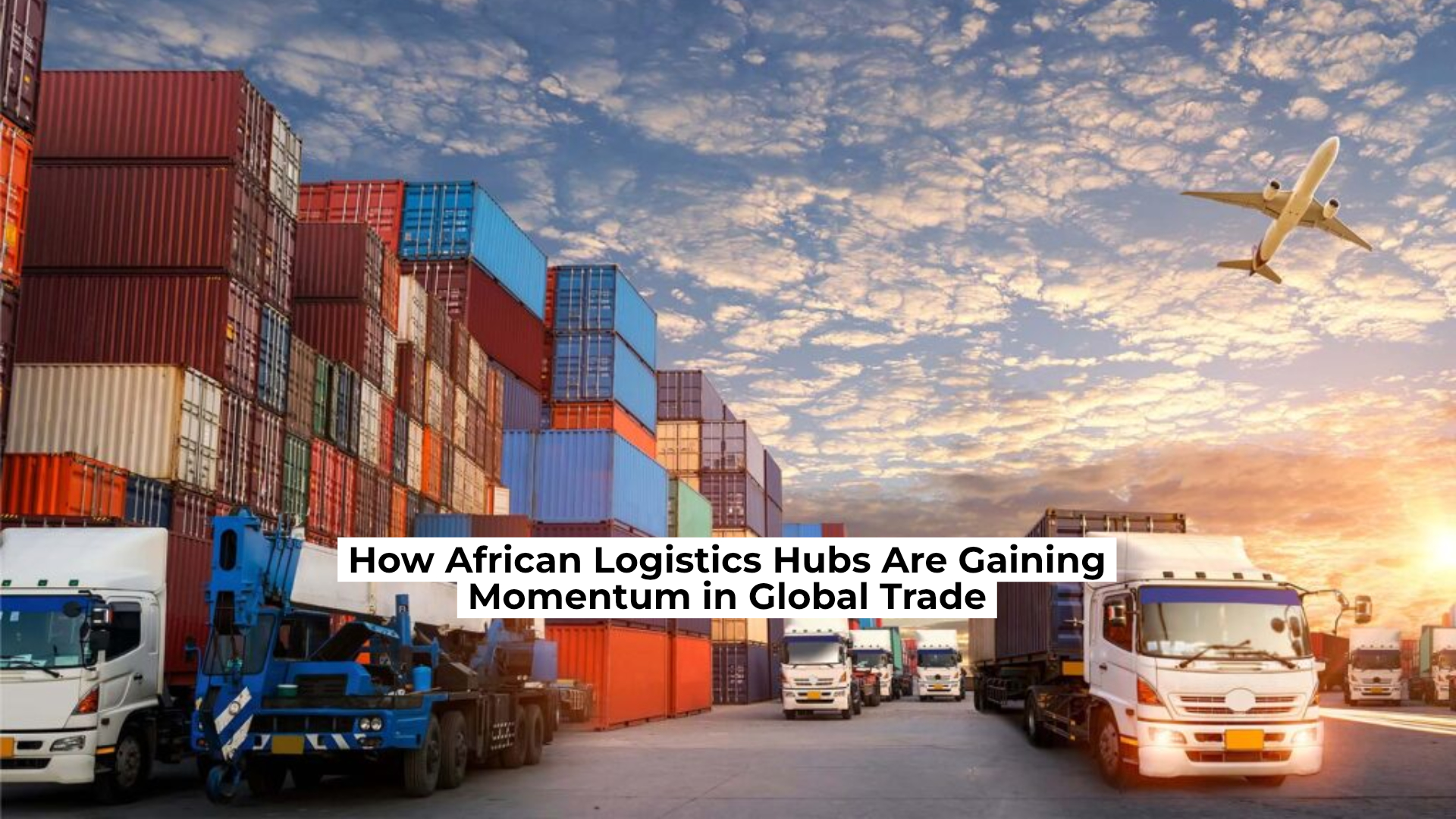
How African Logistics Hubs Are Gaining Momentum in Global Trade
 Anamika Mishra,
Sub Editor
Anamika Mishra,
Sub Editor
For a long time, Africa was seen as a consumer in the global supply chain importing goods, relying on foreign ports, and struggling with weak infrastructure. But today, that story is changing fast.
Across the continent, logistics hubs are rising. Smart ports, free trade zones, and modern infrastructure are positioning Africa not just as a participant in global trade, but as a serious player in it.
Africa has always had the potential, a young, fast-growing population, abundant natural resources, and a strategic location between Asia, Europe, and the Americas. But for decades, supply chains in Africa faced massive challenges. Poor road conditions, outdated ports, and slow, unpredictable customs systems made it difficult for goods to move quickly and efficiently. However, that’s beginning to change in a big way. Governments, private investors, and international partners are pouring billions into logistics infrastructure, determined to transform key cities and ports into major trade gateways.
Several African logistics hubs are already making a name for themselves. In East Africa, Djibouti is now a critical port for the region, especially for landlocked Ethiopia. With support from Chinese investments, Djibouti has modernized its port and rail systems, becoming a vital connector between Africa and Asia.
South Africa continues to lead with its major ports in Durban and newer ones like Ngqura. While Durban remains the continent’s busiest container port, Ngqura is gaining attention with its high-tech facilities and special economic zones. Together, they serve as a key southern gateway to both African and international markets.
In West Africa, Nigeria is stepping up with the massive Lekki Deep Sea Port near Lagos. This project, which includes a free trade zone, aims to ease congestion in existing ports and create a major export hub. It’s also tied into Nigeria’s goal of becoming a regional manufacturing powerhouse.
Kenya’s Mombasa port is another vital hub, especially for East and Central Africa. Kenya has also invested in the Standard Gauge Railway (SGR), which links Mombasa to the capital Nairobi and beyond. This infrastructure helps move goods quickly to inland countries like Uganda, Rwanda, and South Sudan.
One of the most impressive examples is Morocco’s Tanger Med Port. Located near Europe, Tanger Med has become the largest port in Africa, handling over seven million containers a year. Thanks to its location and state-of-the-art facilities, it plays a major role in connecting Europe, Africa, and Asia.
This shift in logistics matters a lot for global trade. With better infrastructure, Africa is now offering easier access to one of the world’s fastest-growing consumer markets. Africa’s population is expected to reach 2.5 billion by 2050. As incomes rise, so will the demand for food, electronics, vehicles, and more. Logistics hubs are essential to meet that demand, delivering goods faster and at a lower cost.
Additionally, many of these new ports and trade zones are attracting manufacturers. With global companies looking to diversify away from Asia due to pandemic-related disruptions and rising tensions, Africa is becoming an attractive alternative. It offers not just raw materials but also labor, land, and growing domestic markets.
Another reason this growth matters is supply chain risk. The pandemic taught businesses a hard lesson overdependence on one region or supplier can be costly. By integrating African hubs into their logistics networks, companies can create more resilient supply chains that have multiple routes and fallback options.
There’s also no shortage of investment. The African Development Bank has pledged over $25 billion toward infrastructure by 2030. Countries like China, the UAE, and members of the European Union are actively funding and building ports, railways, and digital logistics platforms. According to a recent PwC report, the transport and logistics sector in Africa is expected to grow by 8% annually through 2030.
Of course, challenges remain. Corruption, customs delays, and a shortage of skilled logistics workers still exist in many places. Cross-border coordination can also be slow, and digital infrastructure in rural areas still lags behind. But the momentum is there. Trade agreements like the African Continental Free Trade Area (AfCFTA) are working to smooth out these issues by simplifying border processes and encouraging regional cooperation.
In the next five to ten years, Africa’s logistics map will look completely different. Smart ports, rail networks, and digital customs systems will be the norm, not the exception. For global supply chain professionals, this means opportunity. Now is the time to explore sourcing options, build regional partnerships, and rethink logistics strategies to include Africa as a key node in the network.
Africa isn’t just catching up, it’s leapfrogging. With the right investment and collaboration, its logistics hubs could become the heartbeat of 21st-century global trade. The next big supply chain opportunity? It might just be waiting on the African coast.
Explore the latest edition of Journal of Supply Chain Magazine and be part of the JOSC News Bulletin.
Discover all our upcoming events and secure your tickets today.
Journal of Supply Chain is a Hansi Bakis Media brand.
Leave Comment
Join the community of 150,000+ industry professionals
Subscribe to our Daily Newsletter
Subscribe For FreeBy continuing you agree to our Privacy Policy & Terms & Conditions
Latest