Article

China warns Trump on tariffs, threatens retaliation on supply chain deals

July 08, 2025 8 min read
author Anamika Mishra, Sub Editor
news

A Renewed Trade War: Trump’s Tariff Gambit and China’s Stern Warning

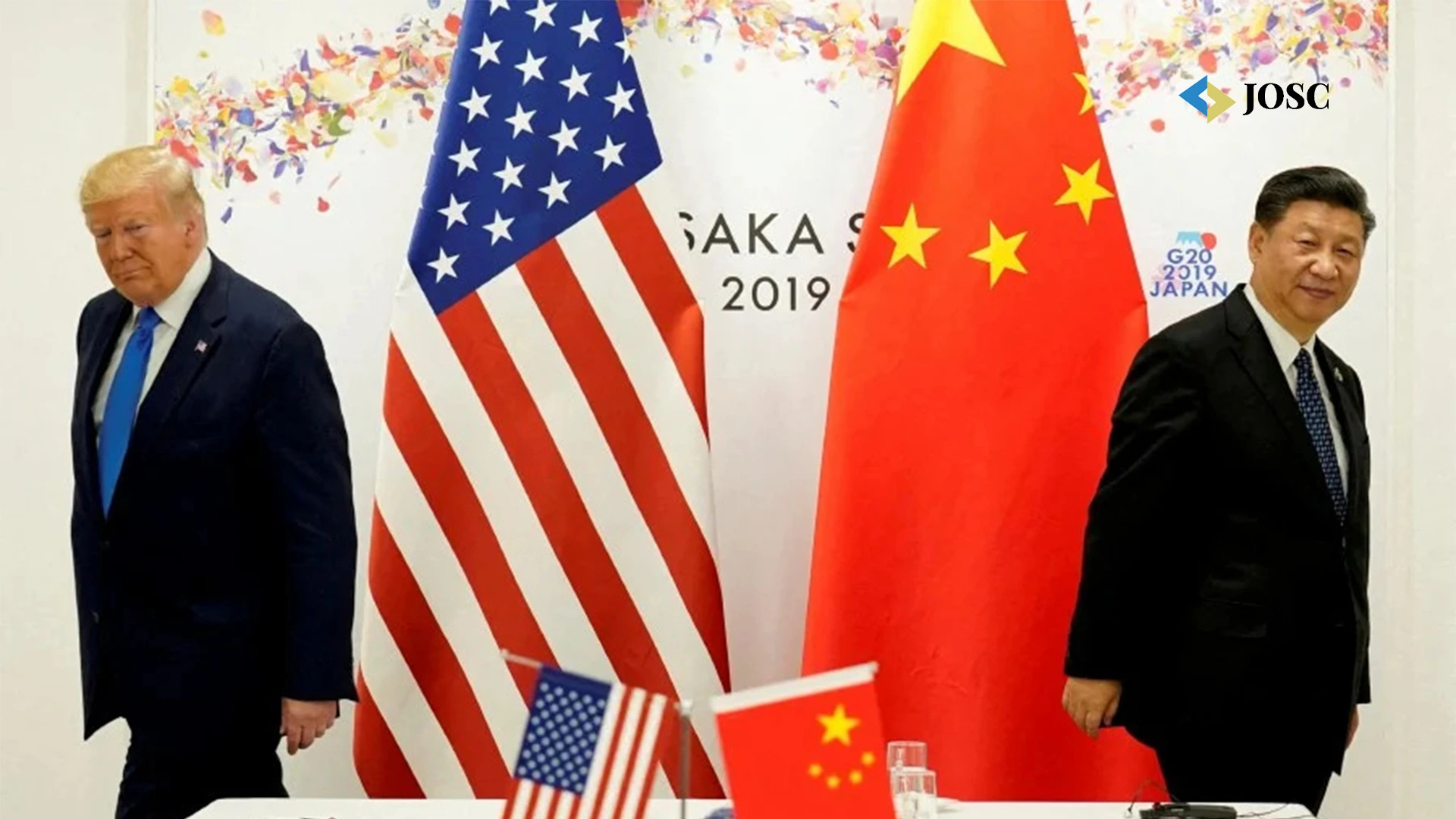
As the global economic order braces for another jolt, tensions between the United States and China have reignited with former U.S. President Donald Trump once again resorting to aggressive tariff policies. In 2025, a series of swift and sharp tariff hikes imposed by Trump on Chinese goods have prompted an equally forceful retaliation from Beijing, raising concerns across global markets, including in India. 

The trigger came in February this year, when Trump imposed a 10% tariff on all Chinese imports under a “fentanyl national emergency” clause. This was soon followed by another 10% hike in March and an additional 34% duty on 2 April, termed a “reciprocal tariff.” By mid-April, Trump proposed another 50% hike, taking the total potential tariff rate on Chinese imports to an astronomical 145%. While the actual applied rate stands lower, the aggressive posturing is unmistakable. 
In return, China wasted no time in responding. It slapped a 34% retaliatory tariff on U.S. goods, later increasing it to 125%. According to available data, average tariffs the U.S. now imposes on Chinese goods stand at 51.1%, while China’s retaliatory average on U.S. imports stands at 32.6%.

“We Will Fight to the End,” says Beijing

In a strongly worded statement through its Foreign Ministry, China has made it abundantly clear that it does not intend to back down. Foreign Ministry spokesperson Lin Jian described the U.S. move as “unilateral bullying”, declaring that China would “fight to the end” if Washington escalates the tariff war. 

Further, the state-owned People’s Daily, in its authoritative “Zhong Sheng” column, accused Trump of “bullying tactics,” stating that only by upholding principled positions can countries “truly safeguard legitimate rights and interests.”

This language is not merely rhetorical; it signals China’s intention to push back with strategic resolve. Commerce Ministry officials have also assured that all necessary countermeasures will be taken to protect China’s sovereignty and industrial interests.

Supply Chain Retaliation: A New Theatre of Contest

Interestingly, China’s retaliation is not limited to tariffs. In an unusual diplomatic step, Beijing has issued a warning to third-party countries particularly Vietnam over their willingness to sign supply chain and tariff agreements with the United States.

Vietnam, which has emerged as a significant beneficiary of the U.S.-China trade rivalry, recently signed a deal with Washington that reduces average U.S. tariffs on Vietnamese goods from 46% to 20%. Even goods routed from China via Vietnam are being charged at a concessional 40%. China sees this as an attempt to bypass tariffs through third countries and has taken exception.

In response, the Chinese Foreign Ministry stated, “We oppose any side striking a deal that sacrifices Chinese interests.” This is being widely interpreted as a message to not just Vietnam, but also countries like India, Indonesia, and Malaysia, who are looking to integrate further into the global manufacturing value chain.

Beijing Doubles Down on Self-Reliance and Domestic Innovation

While the immediate response involves retaliatory tariffs, China’s broader strategy is rooted in self-reliance. Under its "Made in China 2025" and “dual circulation” strategies, China has been accelerating efforts to indigenise its supply chains especially in critical sectors like semiconductors, medical devices, industrial machinery, and electric vehicles.

At least two dozen companies listed on Chinese stock exchanges have recently declared that they are switching from foreign to domestic suppliers due to tariffs. Among them are Estun Automation and China Harzone, which have highlighted the long-term benefits of reducing foreign dependency.

Chinese companies are also hedging against future disruptions. For instance, semiconductor firms are investing in local R&D, and the medical devices sector is rapidly indigenising diagnostic equipment. This transformation may take time, but the trajectory is clear: China no longer wants to be vulnerable to Western supply chain chokepoints.

Rare Earths and Export Controls: The Next Economic Weapon

China, which controls over 60% of global rare earth mineral production, has used its dominance in strategic resources to exert further pressure on the U.S. As of April 4, China has restricted exports of six heavy rare-earth minerals, including terbium and dysprosium, which are crucial for manufacturing smartphones, electric vehicles, and military hardware.

Furthermore, export licenses are now required for tungsten, molybdenum and tellurium key inputs in defense and aerospace technologies. These measures act as non-tariff barriers, directly hurting U.S. and allied industries.

Adding to this, Beijing has initiated a probe into U.S. tech giants such as Google, alleging anti-competitive behaviour and data security violations. These moves serve as indirect retaliation and could further complicate future trade talks.

WTO Involvement and Legal Recourse

China has filed a formal complaint with the World Trade Organization (WTO), challenging the legality of the new U.S. tariffs. While the WTO’s enforcement mechanism has been weakened in recent years, particularly after U.S. obstruction of appellate judge appointments, China’s move underscores its intent to fight the battle on both diplomatic and legal fronts.

China’s argument is that Trump’s tariffs violate the principles of non-discrimination and most-favoured-nation treatment enshrined in the WTO framework. While a final ruling could take years, the legal route offers symbolic weight in China’s broader narrative that it is the victim of unilateral bullying.

Impact on Global Trade: A Ripple Effect Felt in India

The economic ramifications of this new tariff war are not limited to Washington and Beijing. Ports in the U.S., such as the Port of Los Angeles, are already reporting a 35% decline in cargo traffic. Supply chain delays and inflationary pressures are now threatening the global retail industry. According to port authorities, inventories may run dry in 6-8 weeks if disruptions persist.

India is not immune to these effects. As a growing hub for electronics assembly and pharma exports, Indian exporters are closely watching how U.S.-China dynamics evolve. On one hand, Indian manufacturers could benefit from a shift in Western buyers seeking alternatives to China. On the other, if global demand contracts due to inflationary pressures or trade frictions, India’s export economy could suffer.


The government in New Delhi, particularly the Ministry of Commerce and Industry, has already convened meetings with export councils to assess potential fallout.
A Tentative Truce or a Prelude to Decoupling?

In May 2025, there was a temporary thaw. Both the U.S. and China agreed to a 90-day reduction in tariffs: the U.S. brought its average rate down to 30%, while China reduced its retaliatory tariffs to 10%. Trump was quick to declare that “the deal is done,” but Beijing has characterized the outcome as a preliminary “framework for discussions.”
Crucially, China has listed four conditions for resuming broader trade talks:

1.        The U.S. must tone down anti-China rhetoric.
2.        Washington must adopt a stable, consistent policy stance.
3.        Taiwan must be treated as a red line.
4.        The U.S. must appoint a negotiator with authority to engage directly with President Xi Jinping.

Meanwhile, China has suspended discussions regarding the forced sale of TikTok and has made it clear that any further diplomatic engagement depends on the U.S. altering its current trajectory.

India’s Strategic Tightrope: A Time for Policy Calibration

From an Indian standpoint, the current phase of the U.S.-China trade war presents both opportunity and risk. Indian policymakers have long advocated for enhanced domestic manufacturing under the "Make in India" initiative. The disruption in Chinese manufacturing hubs could open doors for Indian companies in sectors such as textiles, pharmaceuticals, electronics, and chemicals.

However, India must navigate carefully. Any attempts to replace China in U.S. supply chains could draw Beijing’s ire much like Vietnam’s experience. Additionally, with a BRICS alliance strengthening (especially with India, China, Russia, and Brazil exploring new trade settlement systems), New Delhi must strike a balance between economic pragmatism and geopolitical alignment.

The Global Trade Map Is Being Redrawn

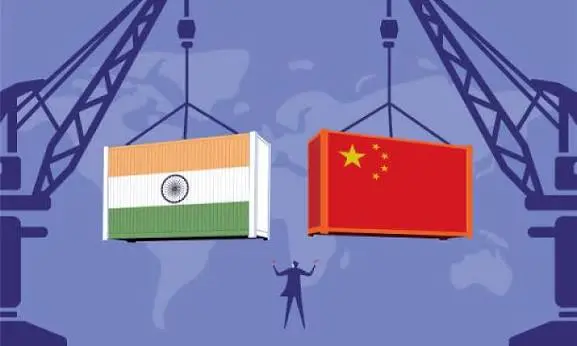
China’s warning to Trump and its broader trade retaliation strategy signifies a tectonic shift in global commerce. The trade war is no longer just about tariffs, it’s about influence, resilience and the ability to weaponize supply chains. China’s threat to retaliate against supply chain deals shows it’s playing a longer, strategic game. 

The temporary tariff rollback offers a window for diplomacy, but unless deeper structural issues are addressed, including technological decoupling and regional influence, the standoff is far from over.

For India, this is a time for strategic patience and sharp economic diplomacy. As global powers battle it out, New Delhi has a unique opportunity to position itself as a neutral yet capable manufacturing hub if it plays its cards wisely.


Explore the latest edition of Journal of Supply Chain Magazine and be part of the JOSC News Bulletin.

Discover all our upcoming events and secure your tickets today.


Journal of Supply Chain is a Hansi Bakis Media brand.

Leave Comment

logo

Subscribe to Our Newsletter

The week’s best stories, handpicked by JOSC editors in your inbox every week.

Stay informed with exclusive content