Article
India's Atmanirbhar Bharat Initiative: Impact on Supply Chains
 Anamika Mishra,
Sub Editor
Anamika Mishra,
Sub Editor

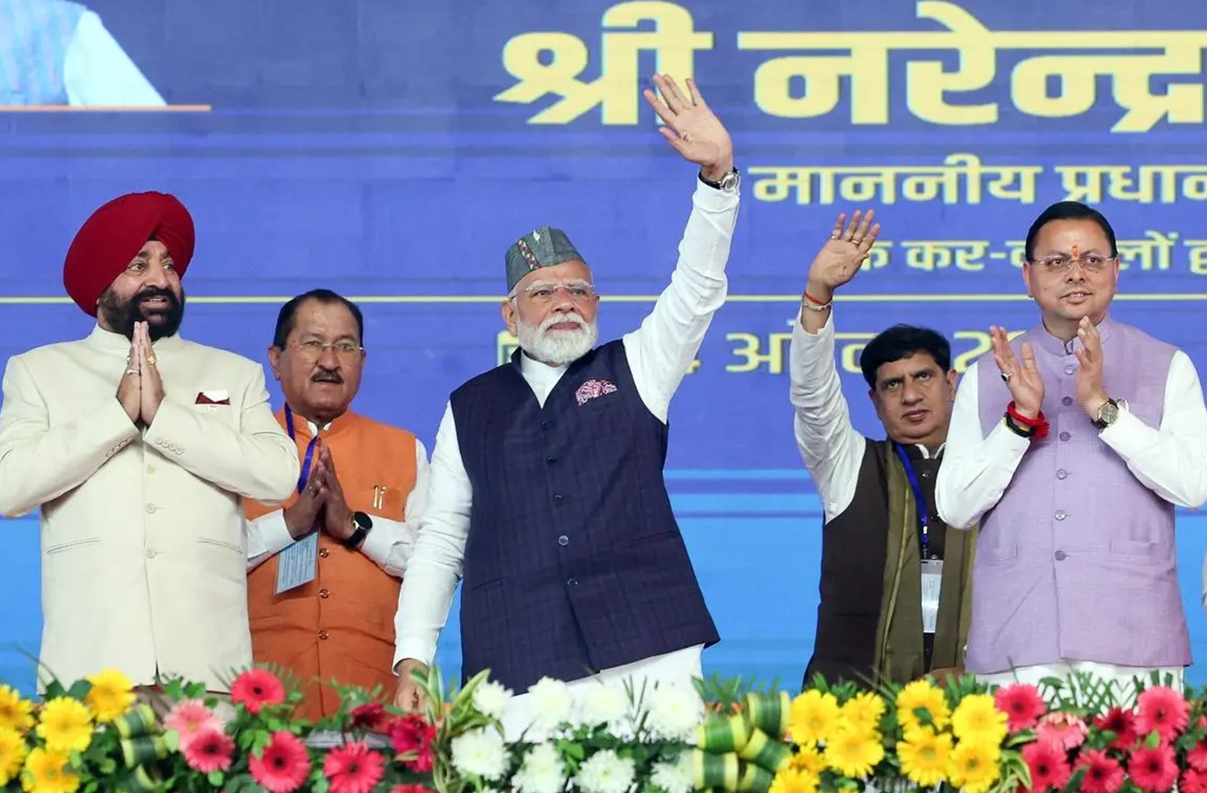
In May 2020, Prime Minister Narendra Modi announced the Atmanirbhar Bharat Initiative all-encompassing framework with the intent to make India self-reliant across sectors. This strategy came as a strategic response to the economic distress caused by the COVID-19 pandemic, which had harnessed the supply chain global network and had indicated the need for changing the approach of highly dependent imports into India. It is the vision of an economy that is resilient, and capable, but integrated into the global market. The Atmanirbhar Bharat Initiative is, therefore, much more than a call for self-sufficiency.
At its core, the Atmanirbhar Bharat Initiative has five pillars: Economy, Infrastructure, System, Vibrant Demography, and Demand. Each of these pillars constitutes a significant component of shaping the landscape of Indian manufacturing and supply chains. The package entails a voluminous amount of financial, to the tune of INR 20 lakh crore, which translates to about USD 268.74 billion, or rather 10% of India's GDP. This fund is exclusively earmarked for the promotion of incentives in terms of domestic production and the country towards obtaining an enabling environment for businesses.
The Atmanirbhar Bharat Initiative concentrates mainly on reducing countries' dependence on imports, most particularly defense, electronics, and drugs. For instance, within the early phases of the pandemic, India saw a sudden change in what it produced. It began manufacturing ventilators, PPE kits, and other equipment for health care, whose import used to originate at this point. As pointed out by Prime Minister Narendra Modi in his Independence Day speech in 2020, "India is now exporting ventilators and PPE kits while we were not even making these earlier. This is how we are becoming Atmanirbhar Bharat."
Conference

Conference

Conference

Conference

Conference

Conference

Summit

The step further details indigenous manufacturing through various schemes that provide incentives to promote local production. Some of the schemes, therefore, include the allocation of about INR 1.97 lakh crore (USD 27.02 billion) for 13 sectors under the Production-Linked Incentive scheme. This is one of those positive initiatives that, through this scheme, intend to pose India as the next manufacturing hub in the world and, simultaneously, increase India's competitiveness in the global markets. This will ensure that the government encourages companies to develop their own facilities within the country rather than importing through monetary incentives to manufacturers who meet some kind of production target.
At the same time, except for the PLI scheme, there are several critical structural reforms in place across the different sectors under Atmanirbhar Bharat, which will help enhance efficiency in the supply chain. For example, in the agriculture sector, reforms include ease and facilitation of inter-state trade and easing of restrictions on agri-marketing. So, even while it enhances farmers' incomes, it reduces marketing costs and benefits consumers too in the long run. This again can be achieved by facilitating a more efficient agricultural supply chain, thereby enabling food security and the rejuvenation of rural economies.
A new initiative under the PM MITRA scheme is targeted at integrated large-scale infrastructure development of textiles as well as other industries. This will, indeed, have better coordination among the various stakeholders and greater efficiency at large in a more streamlined manner due to fewer logistical bottlenecks. It is crucial for India because the sector is contributing significantly towards exports and employment generation.
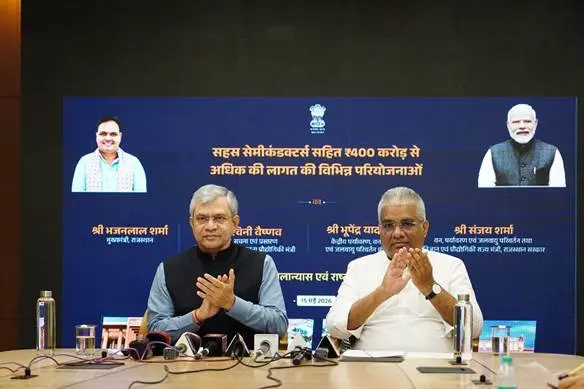
The electronics sector has also received significant attention under the Atmanirbhar Bharat Initiative. India will invest INR 76,000 crore (over USD 10 billion) to develop a semiconductor and display manufacturing ecosystem addressing disruptions in the world's supply chains in these crucial areas. The pandemic set under light the vulnerabilities of global supply chains in electronic components, and India must act in lockstep to develop its domestic production capacity.
Thus, while it has witnessed some dramatic alterations in reorienting supply chains within India under this initiative, a self-reliant model appears much tougher to adopt. Yet the first and foremost challenge is precisely the reconciliation between the advantage of international trade and the requirement of sustainable domestic production capabilities. Since India looks forward to upgrading its base for manufacturing, it must also make sure of keeping itself competitive in the globalized world.
All these elements require collaboration among all stakeholders: government agencies, industry representatives, and academia. Policymakers have to create an ecosystem that fosters innovation and supports industries with a transformation from dependency on imports to self-reliance.
In short, the key objective of skill building is to ensure this country's workforce acquires a skill set that will provide it with strengths in line with the mandates of an ever-changing economy. Atmanirbhar Bharat Scheme Focus: Demography Pillar - Utilizing India's Demographic Dividend by Promoting Skill Building and Employment Investment in education and training in line with emerging industries will ensure that a skilled workforce takes over, fueling innovation and productivity shortly.
In his Atmanirbhar Bharat speeches, PM Modi has constantly reminded the nation that this initiative will hold the key to the wealth of India's future. He said, "Atmanirbhar Bharat is not a call for making India's manufacturing ecosystem an island within itself. It is about domestically producing and consuming whatever can be integrated with global supply chains." This vision shows a pragmatic approach toward achieving self-reliance without cutting international cooperation.
Data that shows growth is coming in India under this scheme indicates the importance of supply chains and economic resilience. The Ministry of Commerce and Industry, according to the report, FY 2021-22 merchandise exports for India have reached an all-time high of USD 400 billion directly due to policies that are supposed to accelerate domestic production capacities.
For instance, the pharmacy sector has been booming these times due to the initiatives under the Atmanirbhar Bharat program. India is already a world leader known as the "pharmacy of the world," with more than 50% of its vaccines sourced globally and providing a significant proportion of generic drug exports. The success that the government has had regarding augmented local production abilities has only further enhanced its reputation in this regard.
Still, on several fronts, there are still many challenges that even can stand in the way of realizing comprehensive self-containment in supply chains. While confronting those challenges, the intensity of supply chain disruptions because of geopolitics and natural disasters, among others, will remain a threat to both domestic and global markets; therefore, resilience must be built into every aspect of these systems.
In addition, regulatory barriers often present challenges that are quite significant to the scaling of operations for most businesses domestically or internationally calls for continued discussion between policymakers and industry stakeholders aimed at smoothing out regulations but doing so without compromising aspects of quality control and safety standards.
Atmanirbhar Bharat is not only about economic metrics but also its social dimensions toward sustainable development. With this, the initiative will flourish local industries and create jobs within the community, including rural areas and even urban centers of Mumbai and Delhi.
In this regard, for example, attention has been specifically accorded to the potential job generation and adding to GDP growth under this initiative by the smaller scale industries. Credit facilities have been made easily accessible, alongside technology transfer programs tailored especially for SSIs way, even smaller players in supply chains shall prosper beside corporations of larger sizes.
In growing debates on self-reliance initiatives around the world, emphasis on the importance of environmental sustainability is now increasingly pointed out; therefore, green practices will be a very integral part of manufacturing from now on if India intends to satisfactorily fulfill commitments toward fighting global warming adequately besides achieving economic results-industrial operations should incorporate renewable energy solutions and reduce waste generation through every stage that takes place in the production cycle.
In addition, Atmanirbhar Bharat's vision is possible through efficient supply chain optimization if digital transformation brings the technologies of AI, IoT, and big data analytics into play to drastically improve the processes of decision-making logistics management inventory control demand patterns forecasting for business decisions in rapidly changing market dynamics with no compromise in quality standards customer satisfaction levels overall.
Looking to Future Prospects Emerging from this Ambitious Initiative Cannot Miss the Importance of Public Sector Collaboration with the Private Sector Working Hand in Hand to Drive Innovation Foster Entrepreneurship Cultivate the Talent Pool Necessary to Propel the Nation Forward Toward Realizing Aspirations Laid Forth by PM Modi Himself, Who Stated: "We have set out on an ambitious journey towards making India self-reliant … It's time we become vocal about our local products."
This appeal rings deeply within the nation's psyche urging all to take pride in promoting homegrown brands and thus causing ripples throughout the entire economy by inciting growth and creating employment opportunities, thereby paving the way to sustainable pathways of development that will undoubtedly be a boon for future generations as well!
The Atmanirbhar Bharat Initiative thus has presented a critical journey toward fortifying the supply chains of India through encouraging domestic production, decreasing dependence on imports in virtually all sectors—this integrated strategy toward growth also utilizes self-reliance in key sectors such as defense technology or systems in healthcare provision.
While considerable progress has been made since its two-year inception-manifested in growing export figures by side with growing local the dream of absolute self-sufficiency remains under execution and will constantly require collective efforts from every agent involved, from the government institution to private enterprise, academic institutions, civil society organizations alike and working together towards the attainment of common goals solidly anchored in this ambitious vision articulated by no one else but Prime Minister Modi himself: "Atmanirbhar Bharat" is not just an economic strategy; it embodies aspirations deeply rooted within the Indian society for sustainable development, equitable prosperity, and future generations ahead!
Explore the latest edition of Journal of Supply Chain Magazine and be part of the JOSC News Bulletin.
Discover all our upcoming events and secure your tickets today.
Journal of Supply Chain is a Hansi Bakis Media brand.
Leave Comment
Join the community of 150,000+ industry professionals
Subscribe to our Daily Newsletter
Subscribe For FreeBy continuing you agree to our Privacy Policy & Terms & Conditions
Latest



Feature Articles



Related